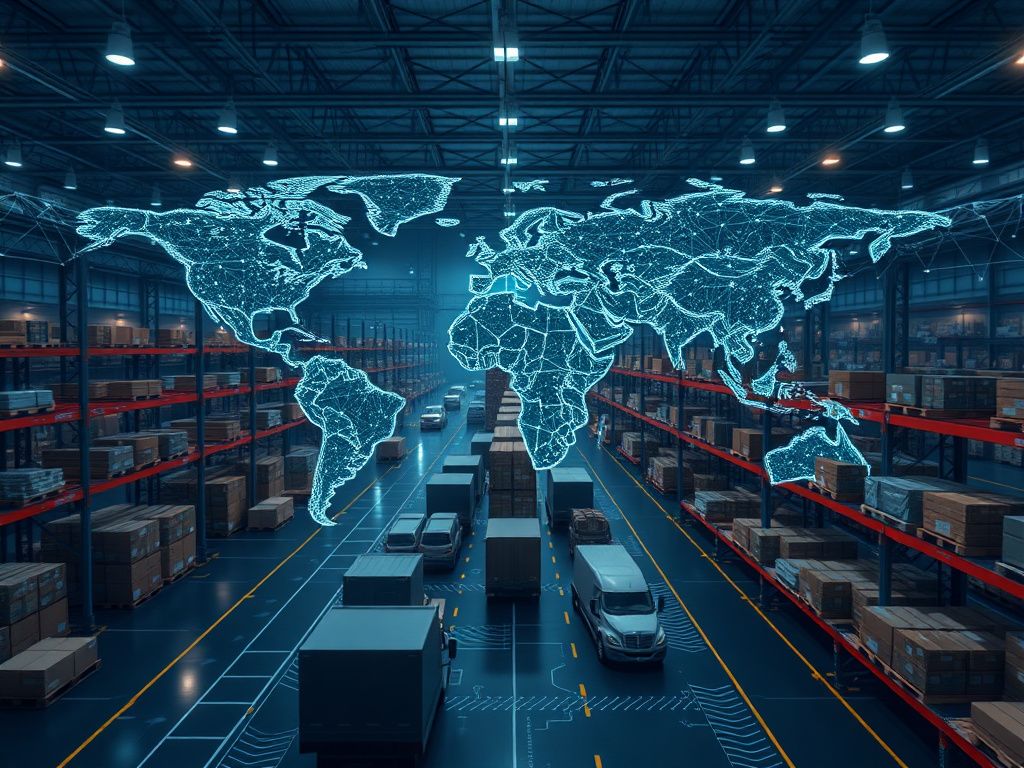
In 2026, the term "arbitrage" in global e-commerce has shed its 2015-era skin of simple retail flipping. It is no longer about finding a cheap gadget on Alibaba to list on Amazon; it is about managing a volatile, hyper-connected supply chain where the biggest risk isn't a competitor—it’s a sudden shift in logistics costs, geopolitical trade barriers, or algorithmic platform bias. Building a scalable model today requires treating your supply chain not as a static sequence of events, but as a fluid, high-stakes data operation.
The Myth of the "Set and Forget" Model
The most dangerous assumption in modern e-commerce is that automation solves complexity. Walk through any Discord server dedicated to cross-border logistics, and you’ll see the reality: a "fully automated" store often masks a brittle system.
When you scale, you aren't just selling products; you are managing a massive portfolio of dependencies. In 2026, the winners aren't those with the deepest pockets, but those with the most "resilient friction." They accept that parts of the system will break—the API connection to a 3PL will fail, a carrier will lose a shipment during a peak season, and a regional policy change will render a product non-compliant overnight.
The Operational Reality:
- Inventory Blindness: Many sellers rely solely on Shopify or Amazon inventory numbers. If you aren't running secondary, off-platform reconciliation logs, you’re flying blind.
- The "3PL Trap": Third-party logistics providers are incentivized for volume, not your brand’s health. If your SKU count grows, expect your storage costs to cannibalize your margins unless you actively audit your "slow-moving" inventory every 30 days.
Designing for Modular Supply Chains
Instead of building a single, monolithic path from factory to consumer, successful players are shifting toward modular redundancy.
If you are sourcing from Southeast Asia to fulfill in the US, do not rely on a single freight forwarder. The 2024-2025 shipping disruptions taught the market a painful lesson: when a major route is blocked or a port union goes on strike, the "cheapest" rate is irrelevant if your stock doesn't move.
"The most successful supply chains I’ve audited in the last year don't look like lines; they look like meshes. They have secondary backup carriers already vetted, even if they aren't the cheapest, just to keep the 'digital heartbeat' of the store alive."
Scaling Strategy:
- De-risk the Node: Never keep more than 60% of your inventory in a single fulfillment center. Use a multi-node strategy to shorten "last-mile" delivery times.
- API Resilience: If your inventory software doesn't have an error-handling protocol for when the carrier API goes down, you are essentially gambling. Always have a CSV-upload fallback ready to go.
- Localized Compliance: Don't wait for a legal notice to learn about import tariffs in a new market. Use dynamic landing cost calculators to stress-test your margins before you even list a product in a new currency.
The Human Element: Why "Data" Isn't Enough
You can optimize your ad spend and your supply chain flow with AI tools, but the trust in your brand is human-made. We’ve seen an explosion in "anti-automation" sentiment among consumers who are tired of generic, dropshipped goods that arrive in unbranded polybags.
The "arbitrage" of 2026 is moving toward curated value. Customers are paying for the effort you put into verifying the product quality, not just the product itself. If you aren't performing manual QA (Quality Assurance) on at least 5% of incoming batches, you aren't a brand; you’re just a clearinghouse for factory seconds.
Common Failure Points: A Field Perspective
If you’re scrolling through Reddit’s r/fulfillment or checking GitHub issues on popular e-commerce integrations, you’ll notice a pattern: most failures aren't technical, they are communication gaps.
- The "Documentation Gap": Your supplier changes a component (a smaller battery, a cheaper plastic) without telling you. You don't find out until your return rate jumps by 15%. This is a standard edge case in global sourcing. Solution: Implement a strict "Change Control" clause in your supplier contract.
- The "Platform Algorithm Whiplash": One day your product ranks high, the next it’s throttled because of an "account health" warning triggered by a single batch of defective units. Scalability means having an "Off-Platform" sales channel (like a standalone site or a smaller marketplace) to hedge against this.
Financial Hygiene in a Low-Margin Environment
Scaling is expensive. Many founders burn out because they treat "Gross Revenue" as their actual working capital.
- Inventory Velocity: If your product sits for more than 90 days, it is a liability, not an asset. Stop trying to move it with more ads; liquidate it, take the loss, and reinvest in high-velocity SKUs.
- Currency Arbitrage: If you operate globally, your biggest hidden cost is bank fees and FX slippage. Moving money across borders is the "invisible tax" that eats 2–4% of your total margin if not managed via multi-currency accounts.