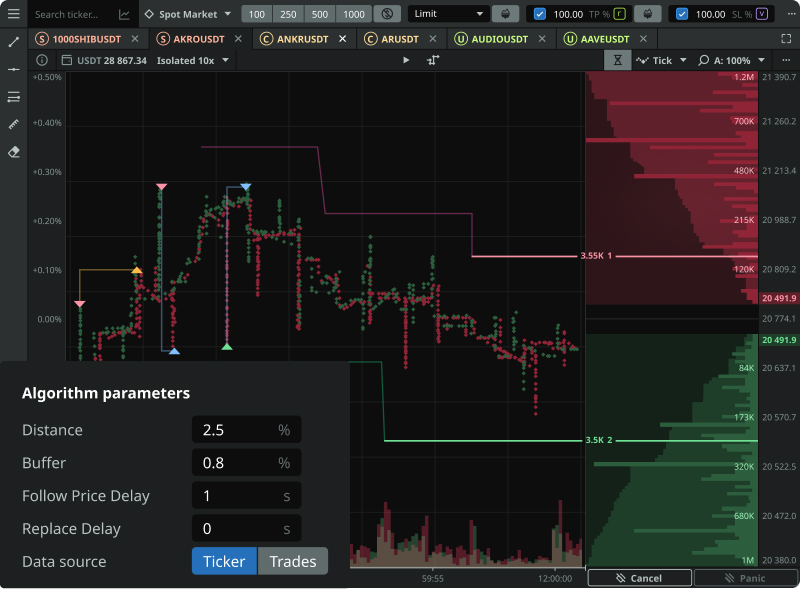
The transition of high-frequency DeFi (decentralized finance) yield farming from a playground for "degens" to a sophisticated institutional-grade treasury strategy for 2026 isn't a story of overnight success. It is a story of infrastructure maturity, the professionalization of smart contract risk, and the grim reality that traditional banking yields have failed to keep pace with the hyper-inflationary pressures of the mid-2020s.
In 2026, the benchmark for a "serious" $100,000 digital asset portfolio has shifted. It is no longer about holding Bitcoin or Ethereum and waiting for the four-year cycle to deliver miracles. It is about "liquidity orchestration"—an automated, high-frequency dance of collateral management that requires more engineering oversight than traditional brokerage management ever did.
The Mechanics of the New Reality
If you dig into the GitHub repositories of the most successful yield aggregators operating today, you won’t find the chaotic, unaudited "farm-and-dump" protocols of 2021. Instead, you find complex multi-chain execution engines that leverage flash-loan-based rebalancing.
The logic is simple but brutal: market inefficiency exists in the fragmentation of liquidity across Layer 2 networks. When a decentralized exchange (DEX) on Arbitrum experiences a sudden spike in trading volume due to a local meme-coin frenzy, the price of stablecoins in its liquidity pools fluctuates. An automated HFT (High-Frequency Trading) bot—often running on a private Relay layer to avoid front-running by public MEV (Maximal Extractable Value) bots—detects the slippage and rotates the portfolio’s liquidity in milliseconds.
"The retail investor is effectively competing against AI-driven agents that manage their own execution priority. If you aren't using a vault that abstracts this, you are just providing liquidity for the whales to harvest." — Commentary from a Lead Infrastructure Engineer on the 'DeFi-Core' Discord server, regarding current protocol latency.
This is not "investing" in the classic sense; it is system maintenance. The operational reality of a $100k portfolio in 2026 involves choosing between dozens of yield aggregators that claim to offer "15% APY with minimized impermanent loss." The catch? If you read the technical documentation—or the warnings buried in the issues tab of their repositories—you realize that these platforms are held together by a fragile chain of Oracles and cross-chain messaging protocols that are prone to intermittent outages.
The Human Cost: A Support Nightmare
The promise of 2026 was seamless, autonomous wealth generation. The reality is a support nightmare. On forums like Reddit’s r/DeFi and specialized Telegram channels, the sentiment is palpably frustrated. The most common complaint isn't about the market going down; it’s about "bridging friction" and "stuck transactions."
Users are frequently finding themselves in a position where their assets are locked in a cross-chain bridge during a period of high volatility. If the bridge protocol’s relayer network slows down, a portfolio that was designed to be hyper-mobile becomes a "brick."
"I missed a 20% swing because the RPC provider we were using for our vault hit its rate limit, and the auto-rebalance script timed out," noted one user in a recent thread on the Arbitrum developer mailing list. "It’s polished, it looks like a clean UI, but the backend is basically held together by duct tape and hope when the chain gets busy."
The Illusion of "Passive" Income
There is a dangerous misconception that high-frequency yield farming is passive. It is, in fact, an active risk management job. The "100k portfolio" benchmark assumes that the owner is capable of:
- Monitoring Oracle health: Knowing when the price feed for a collateral asset is drifting.
- Evaluating smart contract risk: Understanding that in 2026, most hacks are no longer code bugs, but governance exploits where the DAO votes to change a parameter that drains the liquidity pools.
- Managing tax-event overhead: Every "harvest" and "rebalance" is a taxable event. The software is getting better, but the regulatory scrutiny in 2026 is at an all-time high.
The institutional push toward "Real World Assets" (RWA) in DeFi has also introduced new failure modes. We are seeing cases where the underlying asset—like a tokenized U.S. Treasury bill—is frozen by the issuer due to a KYC/AML compliance trigger. Suddenly, your high-speed DeFi yield engine is paralyzed by a legal request from a central authority. This is the ultimate, and often ignored, contradiction of the sector.
Scaling and the "Middle-Class" Squeeze
Why is this the new benchmark for a $100k portfolio? Because at this scale, the transaction costs—gas fees, bridge fees, and performance fees—are high enough to be significant but low enough to still be profitable if you move aggressively. Below $50k, the fees eat the gains. Above $500k, you’re in private-pool territory with different risk models.
The "middle-class" of DeFi is being squeezed. They are the ones funding the liquidity that professional market makers exploit. When a protocol experiences a "scaling issue"—a polite industry term for when the smart contract runs out of gas during a complex multi-hop trade—it is the retail-sized portfolios that get caught in the liquidation crossfire.