
If your Ecovacs Deebot T20 Omni has stopped dispensing water to the mopping pads, you are likely dealing with a localized airlock, mineral buildup in the internal solenoid, or a pinched delivery tube. First, check the clean water tank seal and manually prime the pump through the base station’s maintenance menu. If flow remains absent, inspect the internal O-rings and filter screens for sediment accumulation caused by hard water or chemical additives.
The promise of the T20 Omni—an automated, "set it and forget it" mopping ecosystem—is a beautiful marketing narrative. But in the field, we know the reality. Once you cross the boundary from "new out of the box" to "six months of heavy usage," you are no longer a user; you are a junior technician.
The Anatomy of Failure: Why Solenoids and Peristaltic Pumps Give Up
The T20 Omni uses a sophisticated, multi-stage water delivery system. Unlike older "gravity-feed" robots that just leaked water onto a cloth, the T20 relies on an active pump system inside the robot and a pressurized bridge from the OMNI station. When water flow stops, it’s rarely a "broken" machine; it’s almost always a calcification event.
If you live in a region with hard water, the minerals don't just disappear. They precipitate inside the thin silicone tubing and the micro-valves of the internal manifold. Over time, these minerals create a jagged, crystalline buildup that restricts flow until the pump—which is essentially a tiny, budget-grade DC motor—simply cannot create enough pressure to push water through the resistance.

The "O-Ring Seal" Problem and Vacuum Pressure
One of the most ignored failure points on the T20 is the interface between the base station and the robot. If the O-ring on the charging/water-refilling dock is compromised, the station will report "water tank full" while the internal reservoir of the robot remains bone dry.
I’ve seen users on Reddit (r/Ecovacs) and the official Discord server spend hours "flushing" the machine, only to find that the rubber gasket was slightly misaligned, preventing a vacuum-tight connection. If the robot cannot create a vacuum seal with the dock, the peristaltic pump has to fight against atmospheric pressure, and it will eventually throw a flow-error code.
Real Field Reports: The "Filter Clog" Debacle
In my shop, I frequently see "dead" T20s that were simply victims of user optimization. Many owners, in an attempt to get a "deeper clean," add floor cleaning solutions directly to the clean water tank.
The issue: Most manufacturers specifically state that non-authorized cleaners will void the warranty. Why? Because the surfactants and oils in these soaps turn into a gummy, semi-solid resin when they dry inside the internal micro-filters.
- Case Study A: A user reported that their T20 Omni had zero water flow after three months. Upon teardown, the primary intake filter was coated in a blue, slimy residue—a mixture of hard water minerals and an over-concentration of a popular hardwood floor soap.
- The Fix: A warm (not hot!) distilled water flush, followed by a light vinegar rinse, corrected the flow. But if you have already burnt out the pump motor trying to push through the sludge, you are looking at a full module replacement.
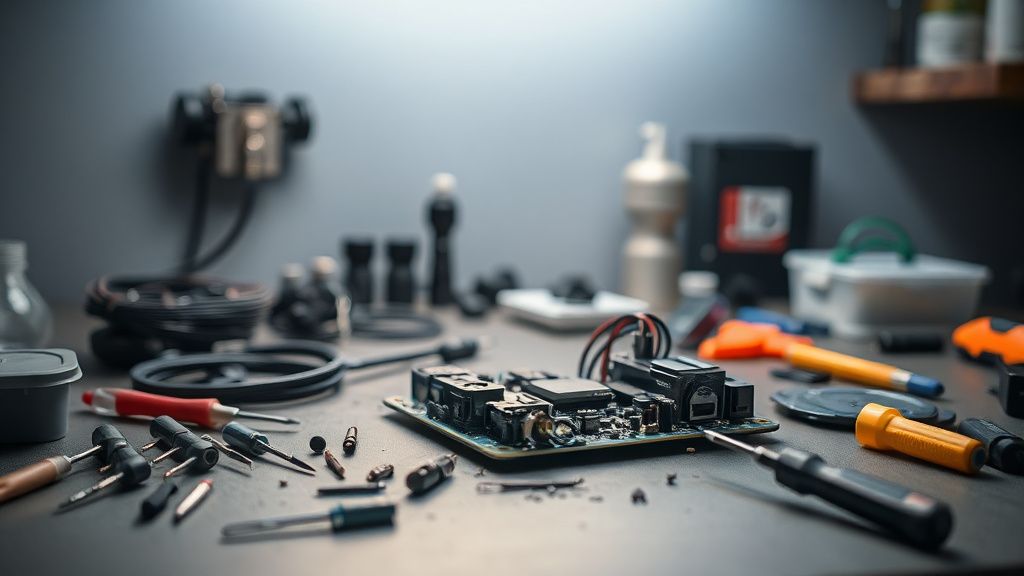
Troubleshooting the T20 Omni Water Delivery System
Before you decide to ship the unit back to the service center—which can take weeks—run through this tiered diagnostic process.
1. The Manual Priming Ritual
Sometimes, the airlock is purely atmospheric. Air bubbles trapped in the pump chamber prevent water from entering the impeller.
- Remove the mopping pads.
- Trigger a "Manual Station Wash" via the app.
- Listen closely to the base station. You should hear a distinct, low-pitched rhythmic vibration. If it sounds high-pitched or "strained," the pump is sucking air.
2. Inspecting the Water Outlet Ports
The ports on the underside of the T20 that transfer water from the internal tank to the pads are notorious for "dust-caking." If you mop without regular vacuuming, fine dust mixes with the water at the port, creating a paste that acts as a concrete plug. Use a soft-bristled toothbrush and a 50/50 mixture of white vinegar and distilled water to gently scrub the outlet port.
3. The Firmware vs. Hardware Paradox
There is a persistent debate in the community regarding whether "No Water Flow" is a software bug. I’ve seen versions of the Ecovacs firmware that incorrectly reported flow errors because the Hall Effect sensor in the tank wasn't triggering fast enough. Before tearing the machine apart, factory reset the robot. It sounds like a generic "IT guy" answer, but it forces the logic board to re-calibrate the sensor thresholds for pump timing.
Debating the "Self-Cleaning" Hype
Marketing tells you the T20 is "self-cleaning." Engineers know better. The base station cleans the mops, but it does not deep-clean the internal lines of the robot.
There is a major disconnect here. The industry is pushing "Omni-everything" units, but they haven't solved the fluid dynamics of long-term maintenance. If you use the machine daily, you are effectively running a small, dirty plumbing system inside your home. The lack of a replaceable, user-serviceable water filter in the robot's internal loop is, in my professional opinion, a design oversight intended to force hardware turnover.
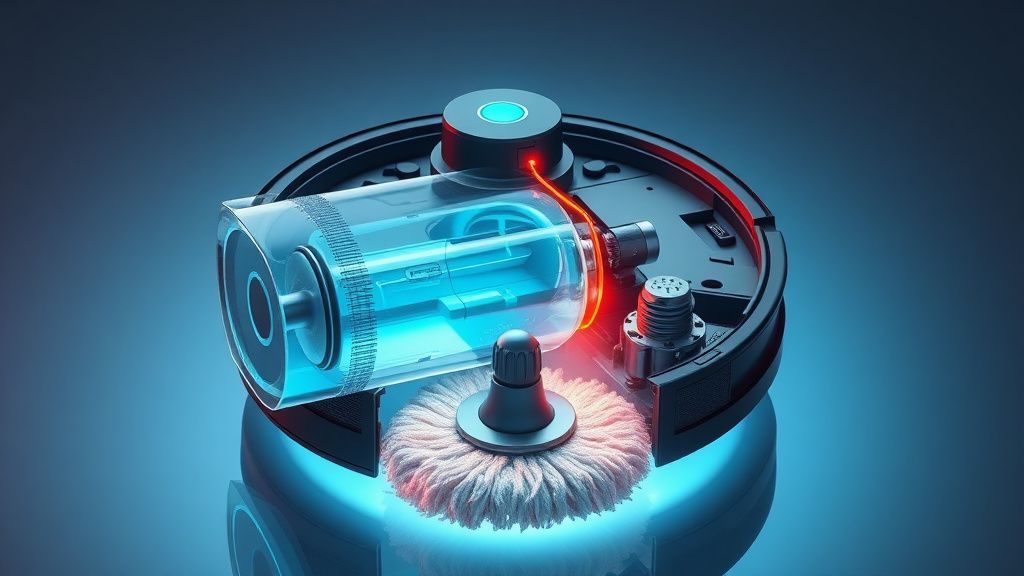
The "Workaround" Culture: When Support Fails
When the official support channels offer nothing but a "send it to us for 30 days" response, the community steps in. On platforms like GitHub and enthusiast forums, owners have developed a "Syringe Prime" method.
By using a small, medical-grade syringe attached to the intake port, owners manually force-feed the system with distilled water to break the airlock. Caution: I cannot emphasize this enough—if you exert too much pressure, you will blow the internal seals. Do this gently.
Balancing Performance and Maintenance
If you are currently experiencing a failure, ask yourself these three questions:
- Do I use distilled water? If the answer is no, your internal lines are likely calcified.
- Did I use a non-Ecovacs cleaning solution? If the answer is yes, you have a residue clog.
- Does the robot report a "Water Tank Error" or just fail to mop? A tank error is usually a sensor/base station issue. Failure to mop with no error is almost always a physical clog in the internal hoses.
Advanced Maintenance: Managing Micro-Clogs
For those brave enough to open the casing, look for the "Y-connector" near the pump. This is where most blockages manifest. The internal diameter is less than 3mm—it is essentially a capillary tube. Using a thin piece of fishing line, you can often clear the debris without disconnecting the hoses, which is a massive win compared to the factory repair process.
Final Thoughts on Hardware Reliability
The Ecovacs Deebot T20 Omni is a marvel of modern consumer automation, but it is not an industrial appliance. It is a fragile balance of plastics, sensors, and pumps that struggle against the entropy of a standard household environment. When it works, it is transformative. When it clogs, it is a reminder that "smart" homes are currently just "more things to fix" homes.