When a four- to eight-year-old outgrows afternoon naps, the stretch between early afternoon and dinner often turns restless. Handing over a tablet provides immediate quiet, but regular reliance on digital media can displace opportunities for solitary focus and self-directed activity. Early learning guidelines from the National Association for the Education of Young Children (NAEYC) note that structured downtime helps children rest without needing sleep. Replacing a nap with an independent rest routine requires a clear physical boundary, predictable materials, and a room free from common hazards. The practical stations below use everyday household supplies to establish reliable downtime that children can manage with an adult nearby.
Setting Up the Rest Zone and Expectations
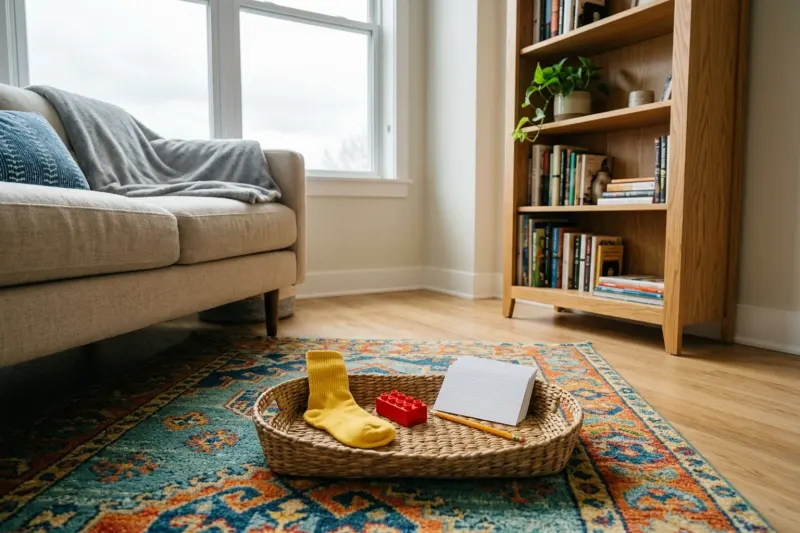
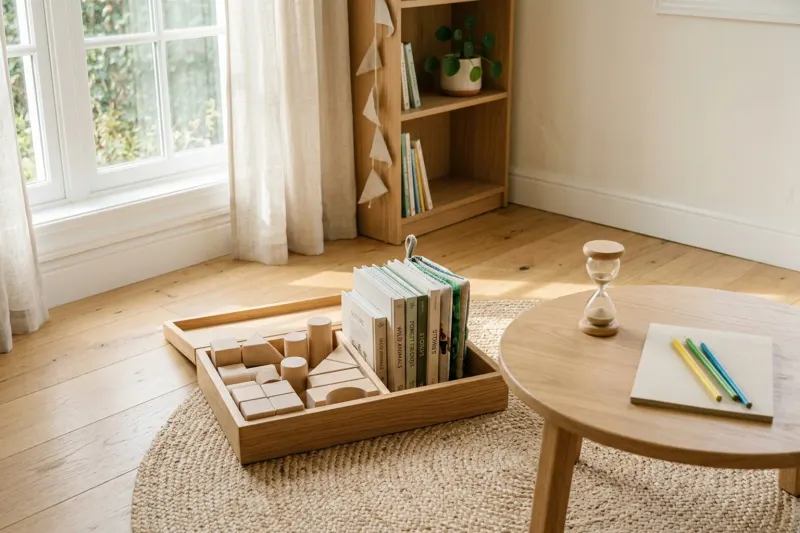
A dependable quiet period starts with a defined, predictable physical space. Frameworks from the Head Start Early Childhood Learning and Knowledge Center emphasize setting up environments where every accessible item is safe for independent handling. Choose a dedicated rug, a floor cushion, or a low table as the rest station. Keep this perimeter well away from unanchored tall dressers, blind cords, and exposed electrical outlets. Time is an abstract concept for young children, so abstract clock intervals often invite repeated interruptions. A non-ticking visual sand timer or an audio playlist that runs for a set duration gives children a concrete boundary they can track on their own. Early childhood resources from PBS KIDS suggest introducing consistent cues, such as lowering overhead lights and placing an activity bin directly on the mat, to signal the transition from active play to quiet resting. Keep household rules short and direct: stay on the designated mat until the visual timer finishes, keep voices at a whisper, work with one activity bin at a time, and pack away items before choosing another. Caregivers should remain within direct earshot and visual check-in distance throughout the rest period.
Related guide: 10 No-Prep Indoor Games for Kids Ages 4–8
Independent "Quiet Keeper" Bins and Puzzles
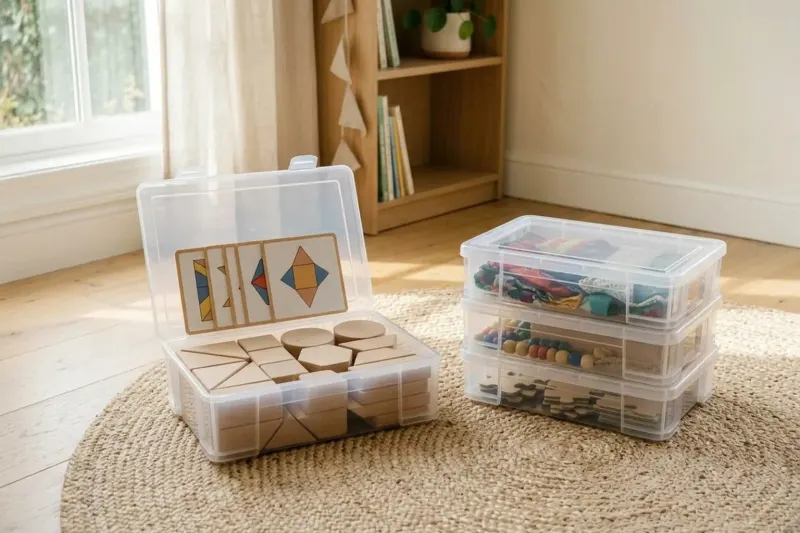
Keep a small selection of age-appropriate activities in an accessible container that an adult can manage. A few sturdy picture books, large drawing paper or a familiar toy used according to its age label may be enough. Match the materials to the actual child, not a fixed puzzle-piece count.
Follow manufacturer age guidance, check for damage and consider younger siblings who may reach the same materials. A single diameter measurement cannot establish that an object is not a choking hazard. Avoid small loose parts if there is any concern about mouthing or access by younger children.
Offer a choice between two manageable activities and let the child stop. Keeping the selection small can make tidying simpler, but no arrangement guarantees independent or quiet play.
Related guide: Five-Minute Waiting Games for Everyday Errands
Screen-Free Audio and Tactile Pairings
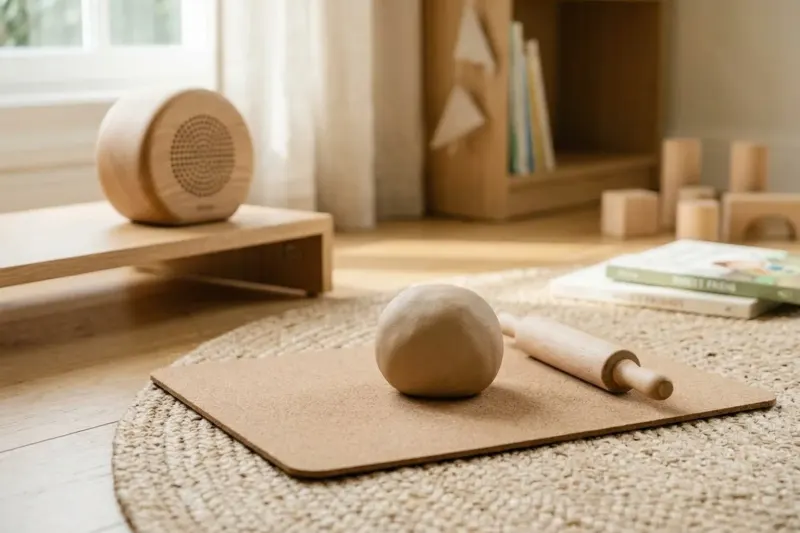
Children who find motionless rest difficult often settle more readily when listening to spoken narrative while their hands stay occupied with repetitive tactile tasks. Guidance from PBS KIDS suggests pairing audio storytelling—such as recorded children's literature, public library audiobooks, or traditional folk tales played over a standalone speaker—with low-energy tactile manipulation. Avoid screens, tablets, or players equipped with glowing digital displays. Place an offline, audio-only speaker on a high shelf well out of reach, leaving the child on their mat with one quiet material. Good pairings include 100 g to 150 g (3.5 oz to 5.3 oz) of non-hardening modeling dough alongside a blunt wooden roller, pre-cut wool felt shapes pressed onto a felt display board, or heavyweight cardboard lacing cards threaded with blunt yarn laces. Adult supervision is required to ensure that speaker power cords are tucked behind heavy furniture and battery compartments remain firmly secured.
Related guide: Small-Space Indoor Scavenger Hunts
Low-Mess Paper Workstations and Mark-Making
Freeform drawing provides a quiet outlet for solitary focus, but messy art supplies like bottled glue, liquid paint, and standard scissors require close adult involvement and disrupt household downtime. Keeping quiet mark-making strictly dry and contained ensures the child works independently without damaging home furnishings. Anchor plain copy paper to a portable clipboard or a sturdy wooden tray using low-tack painter tape at the corners to stop paper from sliding. Provide triangular beeswax crayons or triangular colored pencils; their faceted edges keep them from rolling off tables onto the floor. Simple prompt cards—such as an outline of an empty aquarium, a blank window frame, or concentric circles—offer an easy starting point without imposing rigid expectations. Children ages 6 to 8 often enjoy blank comic strip panels or standard grid paper to draw repeating patterns, mazes, or short story sequences without adult help.
Sorting and Pattern Trays with Everyday Objects
If sorting appeals to your child, use age-appropriate play materials intended for that purpose and follow their safety guidance. Avoid improvised trays of buttons, stones, dried food or other small loose objects, particularly where younger children can reach them.
You can try a sorting conversation without loose pieces: look through a picture book together and notice objects of one color, or compare two large pictures. Supervise and adjust to the child. There is no need to add small materials just to make a quiet-time station look complete.
Matching Quiet-Time Stations to Daily Energy Levels
| Situation | Consider | Why |
|---|---|---|
| The child wants company | Read or look at pictures together | Quiet time need not mean independent play. |
| The child enjoys drawing | Offer age-appropriate drawing materials with suitable supervision | A simple choice does not require a prescribed result. |
| The child is upset or uncomfortable | Pause the activity and respond to the child | A routine should not take priority over their immediate needs. |
Hypothetical Scenario: Setting Up a 35-Minute Quiet Mat Routine
Hypothetical example: a caregiver offers a child a choice between looking at picture books and drawing on large paper in a suitable, uncluttered place. The adult stays available and supervises appropriately. The child can change activity or ask for help; there is no required period of silence or compulsory timer. Start with a short, comfortable interval and adapt it to the child, rather than treating a sample duration as a target.
When this approach is not a good fit
Skip or adapt the routine if the child needs direct attention, the space is not suitable, or safe materials and supervision are unavailable. A quiet activity is not a substitute for rest, care or appropriate adult supervision.
PUT THIS GUIDE TO USE
Find an activity for your family
Sources & further reading
AI-assisted writing and concept images. Sources and automated checks support the process; an adult should check materials and adapt activities to their child.
How we create our guides · Suggest a correction