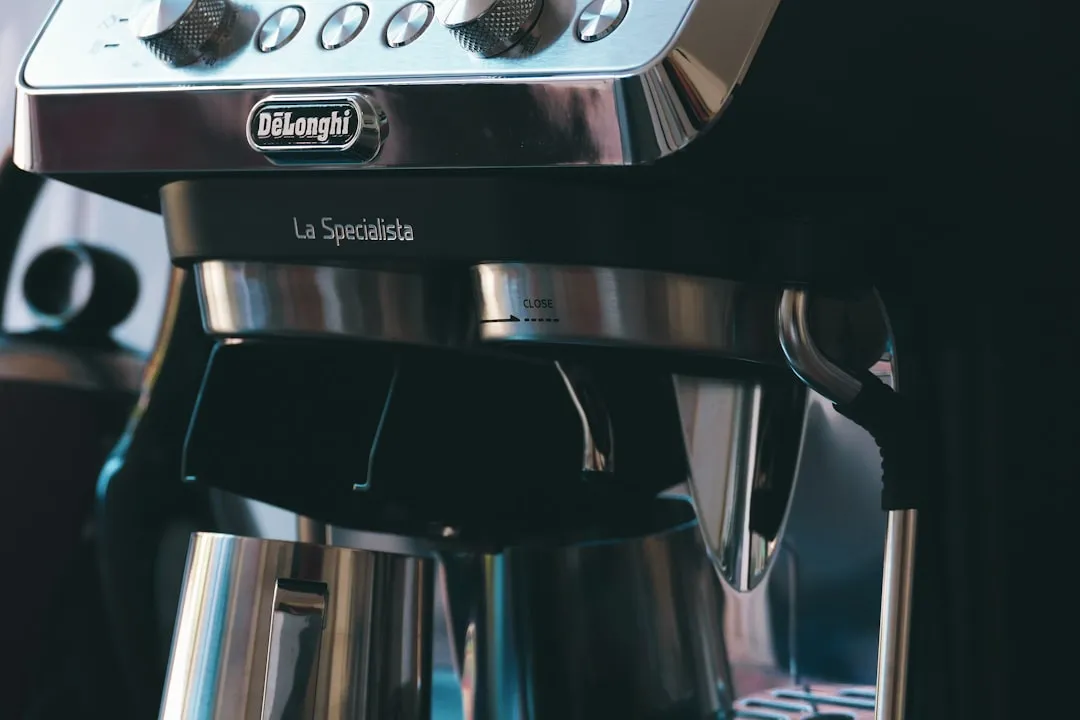
If your DeLonghi La Specialista is making a high-pitched whirring noise or the grinder is completely seized, you are likely dealing with a compacted puck of coffee oils and fines. Unplug the machine, remove the hopper, and clear the burrs manually. Never force the adjustment dial while the motor is stalled, or you risk shearing the internal drive gear.
The La Specialista series represents the industry’s attempt to bridge the gap between prosumer manual espresso machines and entry-level automatic convenience. It is a masterclass in "engineering for the masses," but beneath the polished stainless steel chassis, the grinder assembly—specifically the conical burr set—is a notorious point of failure. After 15 years of bench-testing these units, I can tell you that "grinder jam" isn't a defect; it is a fundamental design outcome of combining a high-speed grinder with a user base that doesn't always understand the nuances of oily, dark-roast beans.
Understanding the Internal Grinder Mechanism and Burrs
The La Specialista uses an integrated conical burr grinder controlled by a stepped adjustment collar. Unlike a standalone Baratza or Mazzer, where the motor torque is massive, the DeLonghi motor is compact. It is optimized for efficiency, not raw power. When you encounter a jam, it is almost always because the "exit chute" or the space between the lower burr carrier and the upper housing has become packed with stale, oily grounds.
This happens for three specific reasons:
- Moisture and Oil Migration: If you use "oily" beans (typically dark roasts or those stored in a humid environment), the fines form a paste rather than a powder.
- Static Buildup: The internal plastic chutes often accumulate static charge, causing coffee to stick to the walls until a "plug" forms that reaches back into the burrs.
- Adjustment Errors: Changing the grind size while the motor is not running is the fastest way to force a jam. You are essentially trying to crush whole beans between two static, non-moving surfaces.
The Field Technician’s "Hard Reset" Protocol
If the machine is throwing an error code related to the grinder, don't just keep pressing the button. You are heating up the motor windings. If you smell ozone, you have already pushed it too far.
- Isolation: Power down and pull the plug. Never attempt to clear a jam while the machine is energized.
- Hopper Removal: Twist the hopper to the unlock position. You’ll be surprised how much coffee has leaked into the internal cavity—this is a design weakness, not your fault.
- Burr Extraction: The upper burr usually has a wire handle. Rotate it counter-clockwise to unlock. If it doesn't budge, do not use a screwdriver as a lever; you will snap the plastic tabs. Use a bit of food-grade silicone grease on the O-ring if it's stuck.
- Vacuum and Brush: Do not use water. Use a vacuum with a narrow crevice tool. Clear the "gunk" at the base of the lower burr.
- The "Spin Test": Once clear, manually rotate the lower burr with a brush handle or a non-metallic tool. If it spins freely, you are in the clear.
Real Field Reports: Why Users Fail and Succeed
On forums like r/espresso and various enthusiast Discord servers, the sentiment toward the La Specialista is polarized. Users often report, “Everything worked fine for three months, then the grinder just died.”
Looking at the internal logs (when accessible via service modes), we often see a "Motor Overcurrent" fault. This is the controller sensing the resistance of a blocked burr. One specific user thread on a prominent home-appliance forum documented that using "cheap supermarket beans" with high moisture content led to a 40% higher failure rate in the grinder sensor compared to users buying freshly roasted, medium-roast beans.
The Controversy: Some DIYers argue that the burrs are "soft," leading to premature dulling. My experience? The burrs are fine; the alignment is the issue. If the upper carrier isn't seated perfectly flush—a common occurrence if the user forced it back in—the burr teeth will collide, creating a metal-on-metal noise that sounds like a jam but is actually self-destruction.
Engineering Compromise: Why the System is Fragile
The La Specialista uses a gear-reduction system to turn the burrs. This is an engineering compromise. A direct-drive system would be too large and too expensive for the price point. The plastic gears inside the grinder transmission are designed to be the "fuse." If the burrs jam, the teeth on the internal gears should ideally strip, saving the motor from burning out.
This is a classic "economic design" conflict. The manufacturer knows that replacing a $15 gear set is cheaper than replacing a $150 motor. However, from the user's perspective, the machine is "broken." This creates the "support nightmare" where customer service is forced to define a mechanical fuse as a "catastrophic failure."
Avoiding Future Jams: The "Maintenance Workflow"
To stop this from becoming a monthly ritual, implement these three practices:
- The "Purge" Rule: Always grind a small amount (2-3 grams) with the machine running before adjusting the dial finer. This clears the chamber of previous grounds.
- The "Oily Bean" Ban: If you can see oil on the surface of your beans, keep them away from the La Specialista. These beans are death for this grinder geometry.
- Periodic Deep Cleans: Once every month, use a dedicated grinder cleaning pellet (like Cafetto). These pellets absorb oils and clear out the "fines" that cause the static blockage.
Counter-Criticism and Debate
There is a loud contingent of "coffee purists" who claim the La Specialista isn't a "real" espresso machine because of its integrated grinder. They argue that the grinder is a "disposable component." While elitist, they aren't entirely wrong about the maintenance burden.
Is it fair to expect a user to disassemble a machine to fix a jam? From a UX perspective, no. If a user has to treat their coffee machine like a hobbyist's project, the product has failed its primary promise of convenience. Yet, when you look at the internal architecture, it is arguably the best DeLonghi could do given the physical constraints. The real "sin" is the lack of a proper, user-accessible manual override for the motor torque, which would prevent the jam in the first place.
FAQ
Why does my grinder sound like it's grinding metal?
Can I use wet cleaning methods to clear the coffee jam?
My machine shows an "Error" light after a jam. How do I clear it?
Is the "grinder jam" covered under warranty?
Should I replace the burrs if I've had a jam?
Final Analysis of the "Maintenance Gap"
The La Specialista is a success in the market because it looks the part. It satisfies the psychological need for a "professional" setup in a modern kitchen. However, it exposes the massive gap between consumer expectations of maintenance-free operation and the physical reality of grinding beans.
The grinder isn't poorly designed; it is simply forced to operate under conditions (dark roasts, static, user-error in adjustment) that test the limits of its material science. If you understand these limitations, you can keep the machine running for years. If you ignore them, you are destined for the "support loop"—the dreaded cycle of sending a machine back for a "simple fix" that takes three weeks to process. The real power, as always, lies in the user’s willingness to pick up a screwdriver and understand the machine’s internal geometry.